Frank Herbert Books in Order

Frank Herbert was an American science fiction author best known for his epic novel "Dune" (1965), widely considered one of the greatest and most influential science fiction novels ever written. Born on October 8, 1920, in Tacoma, Washington, Herbert led a varied career before achieving literary fame, working as a journalist, photographer, and oyster diver among other occupations. Herbert spent six years writing "Dune," meticulously crafting its intricate world of desert planets, giant sandworms, and complex political intrigue. The novel was rejected by more than 20 publishers before Chilton Books—known primarily for auto repair manuals—took a chance on it. The gamble paid off spectacularly: "Dune" won both the Hugo Award (1966) and the inaugural Nebula Award for Best Novel, establishing Herbert as a master of the genre. The novel's themes of ecology, religion, politics, and the dangers of charismatic leadership were groundbreaking for science fiction. Herbert created a fully realized universe spanning thousands of years, complete with its own languages, religions, and social structures. The planet Arrakis, with its precious spice melange and harsh desert environment, became one of science fiction's most iconic settings. Herbert wrote five sequels to "Dune": "Dune Messiah" (1969), "Children of Dune" (1976), "God Emperor of Dune" (1981), "Heretics of Dune" (1984), and "Chapterhouse: Dune" (1985). He was working on a seventh book when he died on February 11, 1986, in Madison, Wisconsin. His legacy continues through the acclaimed film adaptations directed by Denis Villeneuve (2021, 2024) and through additional novels written by his son Brian Herbert and author Kevin J. Anderson.

All Frank Herbert Book Series

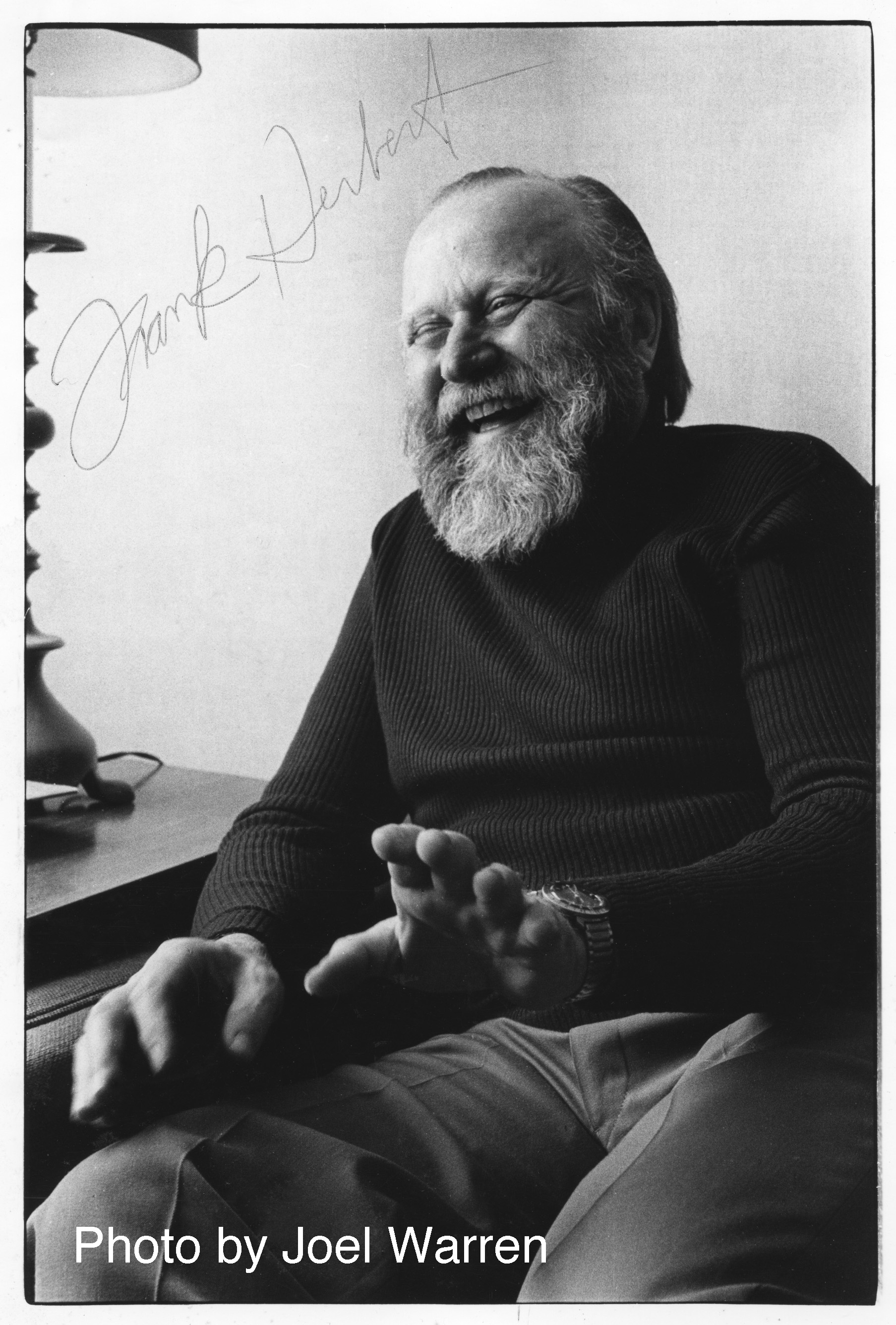
Author portrait

Frank Herbert

Born: 1920

Frank Herbert was an American science fiction author best known for his epic novel "Dune" (1965), widely considered one of the greatest and most influential science fiction novels ever written. Born on October 8, 1920, in Tacoma, Washington, Herbert led a varied career before achieving literary fame, working as a journalist, photographer, and oyster diver among other occupations. Herbert spent six years writing "Dune," meticulously crafting its intricate world of desert planets, giant sandworms, and complex political intrigue. The novel was rejected by more than 20 publishers before Chilton Books—known primarily for auto repair manuals—took a chance on it. The gamble paid off spectacularly: "Dune" won both the Hugo Award (1966) and the inaugural Nebula Award for Best Novel, establishing Herbert as a master of the genre. The novel's themes of ecology, religion, politics, and the dangers of charismatic leadership were groundbreaking for science fiction. Herbert created a fully realized universe spanning thousands of years, complete with its own languages, religions, and social structures. The planet Arrakis, with its precious spice melange and harsh desert environment, became one of science fiction's most iconic settings. Herbert wrote five sequels to "Dune": "Dune Messiah" (1969), "Children of Dune" (1976), "God Emperor of Dune" (1981), "Heretics of Dune" (1984), and "Chapterhouse: Dune" (1985). He was working on a seventh book when he died on February 11, 1986, in Madison, Wisconsin. His legacy continues through the acclaimed film adaptations directed by Denis Villeneuve (2021, 2024) and through additional novels written by his son Brian Herbert and author Kevin J. Anderson.